|
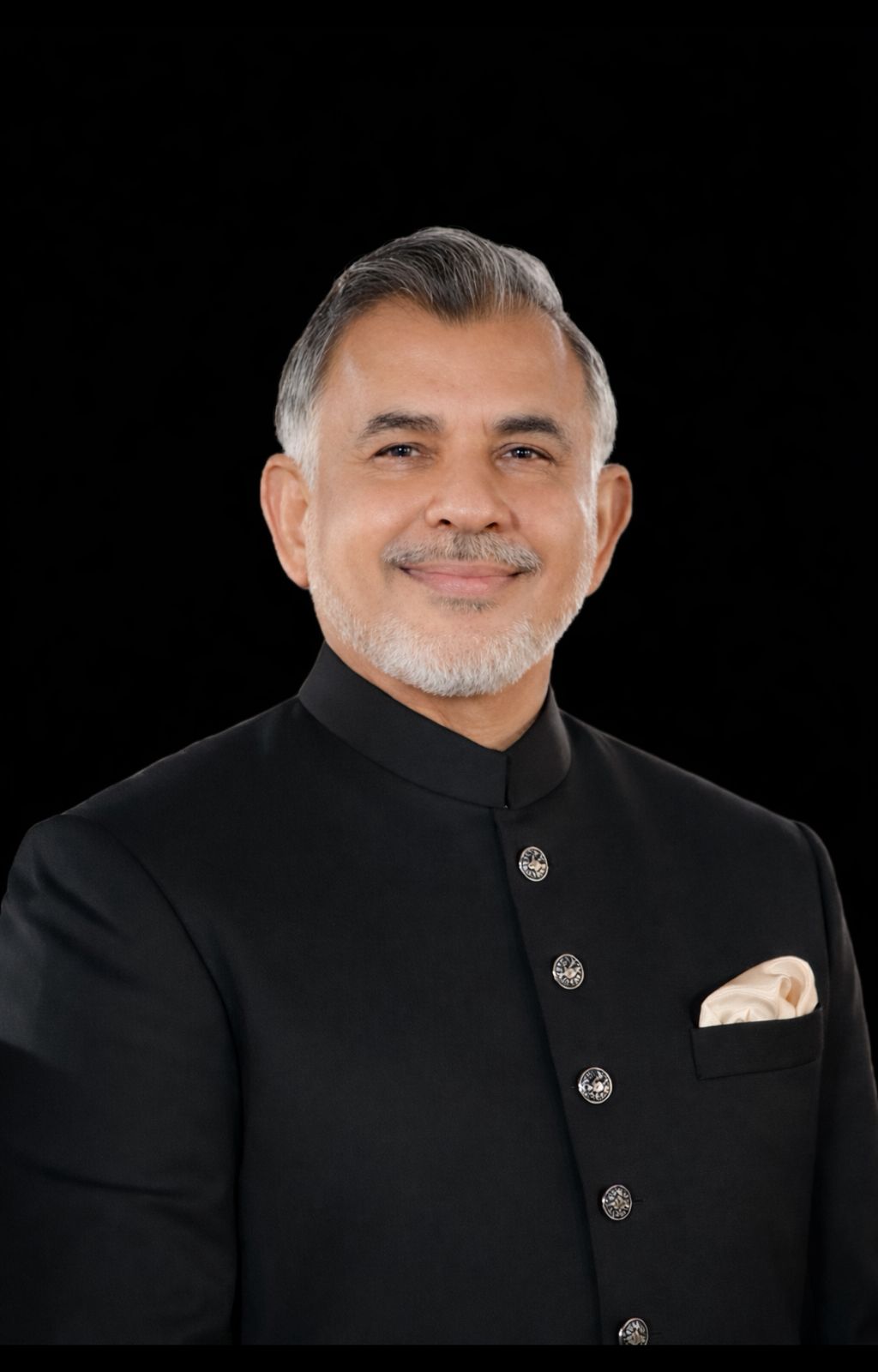
Justice Zulfiqar Ahmad Khan is a former Judge of the High Court of Sindh with over four decades of experience encompassing legal practice, judicial service, legislative drafting, alternative dispute resolution, and international legal engagement, particularly in the fields of constitutional law, intellectual property, technology, and commercial law.
|
|
He holds a degree in Mechanical Engineering from NED University of Engineering & Technology, Karachi, an LL.B. from the University of Karachi, and a Postgraduate Diploma in IT and Telecom Laws from the University of Strathclyde, Glasgow. He has also completed specialized professional training in patent drafting under Australian standards and advanced international courses in intellectual property and related legal disciplines.
|
|
Before his elevation to the bench, Justice Khan was a leading practitioner in intellectual property, technology, media, maritime, and construction law. He is the principal author of the Trade Marks Ordinance, 2001, and has drafted or contributed to several key intellectual property, technology, and regulatory frameworks in Pakistan. He represented Pakistan before the World Intellectual Property Organization and the WTO TRIPS Council and assisted in Pakistan’s accession to the World Trade Organization.
|
|
During his professional career spanning more than three decades, Justice Zulfiqar Ahmad Khan has been associated with numerous national and international professional organizations in the fields of intellectual property, commercial law, and dispute resolution. These associations include the Asian Patent Attorneys Association (Japan); the Institute of Patent Attorneys of Australia (Australia); the International Chamber of Commerce (France); the Fédération Internationale des Conseils en Propriété Industrielle (FICPI), Switzerland; the American Bar Association (United States); the International Trademark Association (United States); the International Association for the Protection of Intellectual Property (AIPPI), Switzerland, where he also served as a Past Delegate for Independent Members from Europe and Asia; the European Communities Trademark Association (European Union); the American Intellectual Property Law Association (United States); the South African Institute of Intellectual Property Law (South Africa); the Institute of Trade Mark Agents (United Kingdom); DRI – Defense Attorneys Association (United States); the Chartered Institute of Patent Agents (United Kingdom); the International Bar Association; the Licensing Executives Society; Counterfeiting Intelligence Bureau / Counter Force, a specialized group of the International Chamber of Commerce (Switzerland); the National Association of Patent Professionals (United States); the Pharmaceutical Trade Mark Group (United Kingdom); the Center for International Legal Studies (Switzerland); the German Association for the Protection of Intellectual Property (GRUR), Germany; the Biotechnology Industry Association (United States); the Law Association for Asia and the Pacific (LAWASIA), Australia; the Japan Intellectual Property Association (Japan); ICANN At-Large for the Asia Pacific Region; the Pakistan Industrial and Intellectual Property Rights Association; the Pakistan Engineering Council; the Urban and Regional Information Systems Association (United States); and the Pakistan Japan Business Council.
|
|
Justice Khan has also served on a number of international and national committees. He has been a member of committees of the American Bar Association, the International Trademark Association, the Asian Patent Attorneys Association, and the European Communities Trademark Association, dealing with matters including legal databases, copyright developments, trademark litigation, publications, famous and well-known marks, trademark and internet law, WIPO linkage, and anti-counterfeiting. He has further served on committees of the Ministry of Commerce, Government of Pakistan, relating to intellectual property rights, and on the working group of the Ministry of Industries, Government of Pakistan, for amendments to patent law. Justice Khan has represented Pakistan at various sessions of the World Intellectual Property Organization and the World Trade Organization. In addition, he was a member of the International Chamber of Commerce Commissions on International Arbitration and on Intellectual and Industrial Property, as well as the American Intellectual Property Law Association Committee on Practice in Europe.
|
|
During his judicial tenure, Justice Khan decided more than 13,000 cases and authored thousands of judgments across constitutional, civil, criminal, commercial, family, and intellectual property jurisdictions. His judgments during the last decade of his service introduced notable jurisprudential developments.
|
|
In applying the Hague Convention on the Civil Aspects of International Child Abduction, he ordered the repatriation of a minor to the State of habitual residence in the United States. As a constitutional judge, he interpreted the right to life under Article 14 of the Constitution to include access to essential medicines at affordable prices. In family law, he permitted single mothers to travel abroad with minor children where improved livelihood opportunities were demonstrated, balancing parental rights with child welfare considerations.
|
|
Justice Khan’s dual academic background in engineering and law enabled him to adjudicate complex matters involving technology transfer, high-technology imports, and technically intensive commercial disputes. In civil jurisprudence, he held that DNA testing is impermissible for determining paternity in property disputes. His judgments in intellectual property matters are widely regarded as significant contributions to the development and enforcement of IP rights in Pakistan.
|
|
As Head of the High Court’s Information Technology Committee, Justice Khan articulated the vision for a paperless court system and explored the institutional use of technology, including artificial intelligence, in judicial administration. In rent and tenancy matters, he employed arbitration and reconciliation methodologies to balance the competing rights of landlords and tenants. His criminal law jurisprudence, particularly in murder cases, contributed to evolving prosecutorial and evidentiary approaches.
|
|
Justice Khan has also taken a sustained interest in child protection, particularly in combating online sexual abuse of children, and facilitated specialized training programs for investigators in this sensitive area. He has worked closely with the Global Missing Children’s Network and the International Centre for Missing and Exploited Children (ICMEC) on issues relating to child protection and online sexual exploitation of children. In this capacity, he has conducted and facilitated specialized training programs for judges on these subjects in Pakistan, Kathmandu, and through international online platforms.
|
|
He was a strong proponent of arbitration and supported the legal framework that culminated in the Recognition and Enforcement (Arbitration Agreements and Foreign Arbitral Awards) Act, 2011, enabling the effective enforcement of foreign arbitral awards in Pakistan.
|
|
Justice Khan has made significant scholarly contributions to intellectual property law through his writings in leading international legal publications. His work has appeared in Trade Mark World and the AIPPI Journal (Japan). He has authored the Pakistan chapters in the Financial Times publication Trade Marks, Trade Names and Unfair Competition; the Pakistan Country Report for the International Trademark Association; the Pakistan chapter on Life Sciences Law in the Life Science Law Review published by Law Business Research Ltd. (United Kingdom); and the Pakistan chapter on Trade Marks in the World Trademark Review. His articles on the Pakistan Patent Ordinance, 2000 and the Protection of Layout Designs of Integrated Circuits have been published in IP Frontline. He also authored the Pakistan Patent Office Work Manual for the Pakistan Patent Office pursuant to an assignment from the World Intellectual Property Organization (WIPO). He serves as the Country Representative for Pakistan for the Bio-Science Law Review published by Law Text Publishing Limited (United Kingdom).
|
|
Following his judicial service, Justice Khan became an Accredited Mediator and founded the Khursheed Khan Center for Alternative Dispute Settlement. He had long ago founded Khursheed Khan Center for Advancement of Research in Constitutional and Human Settlement Laws, reflecting his continued commitment to dispute resolution, legal reform, and rights-based legal development. These institutions are beside Pakistan Legal Information Foundation and Pakistan Environmental Law Association that Justice Khan created more than 3 decades ago.
|
|
In addition to judicial work, Justice Khan has been deeply involved in legal education, judicial training, and professional development throughout his career. His professional life reflects a sustained commitment to strengthening legal institutions, advancing constitutional values, and integrating international best practices into domestic law.
|
|
Justice Khan was enrolled as an Advocate in the province of Sindh in the year 1993, elevated to the Bench in 2015 and retired as Judge of the High Court of Sindh on 31st July 2025.
|